❧ Written Entry
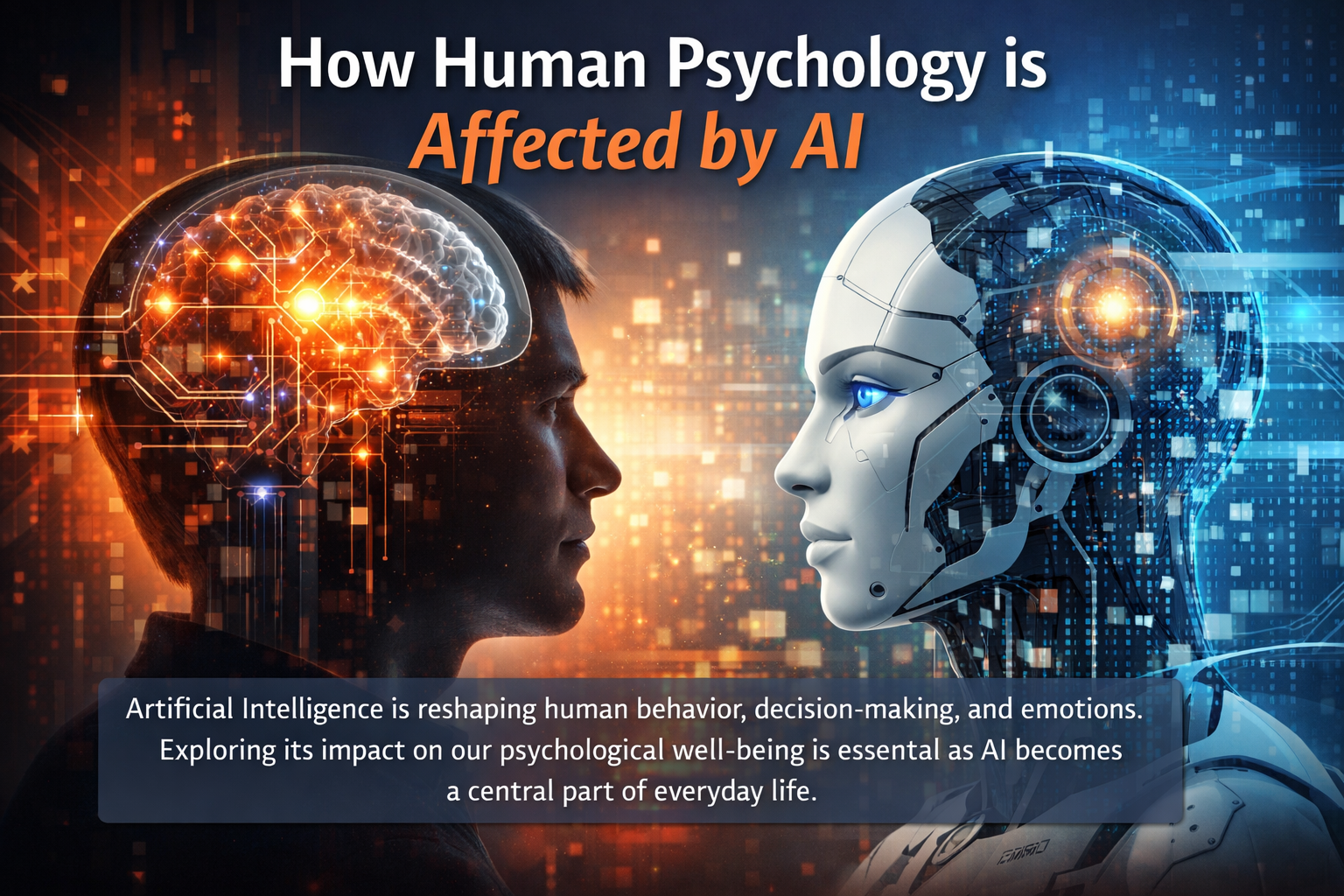
How Human Psychology is Affected by AI
How Human Psychology is Affected by AI
Short Description: This article explores how Artificial Intelligence (AI) influences human thoughts, behaviors, emotions, and cognition—both positively and negatively—based on recent research and psychological insights.
Introduction
Artificial Intelligence (AI) technologies are deeply woven into our daily routines, from recommendation systems and chatbots to virtual assistants and automated decision tools. AI’s influence stretches beyond convenience—shaping how we think, make decisions, interact socially, and even view ourselves. As AI grows more intelligent and pervasive, understanding its psychological effect becomes essential. :contentReference[oaicite:0]{index=0}
Cognitive Effects: Thinking and Decision‑Making
AI helps with reasoning and decisions, but reliance on it can reduce active problem solving and critical thinking over time.
Research suggests frequent use of AI tools is linked to lower engagement with analytical tasks, as cognitive effort gets delegated to machines. This “cognitive offloading” can make independent reasoning feel inefficient, especially for younger users, potentially diminishing deep reasoning skills over time. :contentReference[oaicite:1]{index=1}
Another study shows that automation bias—the tendency to trust AI outputs without question—can erode human agency, making people more likely to accept AI decisions even when flawed. :contentReference[oaicite:2]{index=2}
Emotional and Social Impact
AI’s design can shape feelings of attachment, trust, and even loneliness, depending on how it’s used.
AI systems, especially conversational agents and chatbots, can foster emotional attachment. People often attribute human traits to them, which blurs boundaries between digital interactions and real social connection. :contentReference[oaicite:3]{index=3}
In some research, heavy use of conversational AI was linked with increased feelings of loneliness and emotional dependency—raising questions about AI’s long‑term social effects. :contentReference[oaicite:4]{index=4}
Behavior and Social Perception
Exposure to AI and algorithmic personalization shapes how humans think about human traits and social norms.
Studies have found that learning about AI advances leads people to value human‑unique attributes like personality and beliefs more strongly than shared logical skills, suggesting AI changes how we *define* what it means to be human. :contentReference[oaicite:5]{index=5}
AI’s personalization in social media affects trust and privacy perceptions, influencing how people engage with content and consume information. :contentReference[oaicite:6]{index=6}
Psychological Stress and Anxiety
AI use can provoke uncertainty about work and future skills, leading to stress and anxiety.
The rise of AI has generated “AI anxiety”—a stress response linked to job displacement fears and concerns about self‑efficacy. Studies show individuals with lower confidence in handling AI‑driven change may pay more or invest more effort to adapt. :contentReference[oaicite:7]{index=7}
Positive Aspects of AI Interaction
When used responsibly, AI can support empathy, learning, and productivity.
AI tools can offer structured explanations, reduce administrative burdens, and help users complete complex tasks more efficiently, benefiting learning and productivity when used as a *scaffold* rather than a substitution for human effort. :contentReference[oaicite:8]{index=8}
In educational and healthcare contexts, AI can personalize learning and decision support, providing psychological comfort and accessibility for users who might otherwise struggle. :contentReference[oaicite:9]{index=9}
Conclusion
The psychological impact of AI is multifaceted—offering significant benefits in decision support, empathy, and productivity while posing risks to critical thinking, social relationships, autonomy, and emotional health. Awareness, ethical design, and mindful use are vital to balance the promise of AI with healthy psychological outcomes.
Key References:
- Varshney, A. et al. on AI and human interaction. :contentReference[oaicite:10]{index=10}
- Institute of Internet Economics report on cognitive trade‑offs. :contentReference[oaicite:11]{index=11}
- Studies on automation bias and decision‑making shifts. :contentReference[oaicite:12]{index=12}
- Research on the perceived “AI Effect” on human attributes. :contentReference[oaicite:13]{index=13}