❧ Written Entry
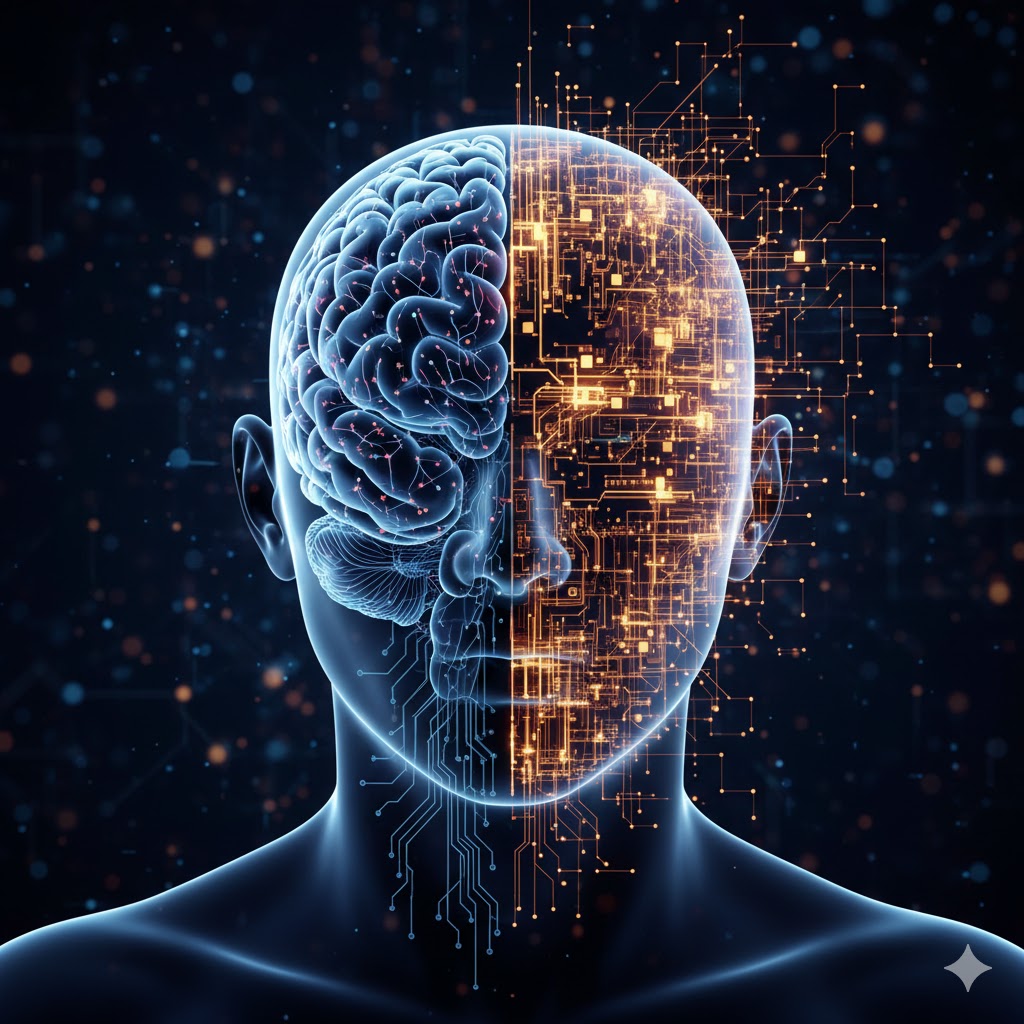
The Silicon Soul: Exploring the Intersection of AI and Human Psychology
The Silicon Soul: Exploring the Intersection of AI and Human Psychology
Excerpt: As artificial intelligence evolves from a tool into a companion, the boundaries between human cognition and machine logic are blurring. This article delves into the profound psychological impact of AI on the human mind, exploring how "black box" algorithms are reshaping our social behaviors, decision-making, and even our sense of self.
The dawn of the artificial intelligence era has ushered in a period of unprecedented technological advancement, fundamentally altering how we interact with the world and, more subtly, how we interact with ourselves. Beyond the algorithms that drive our recommendations or optimize our schedules, AI is now delving into the very fabric of human psychology, influencing our emotions, shaping our decisions, and even challenging our understanding of consciousness.
1. The Feedback Loop of Behavior: Dopamine and Digital Divinity
Perhaps one of the most immediate and pervasive psychological impacts of AI is its role in shaping our daily behaviors, particularly through social media and content platforms. These systems are powered by sophisticated algorithms designed not just to predict what we like, but to learn what keeps us engaged. Through a process akin to reinforcement learning, AI identifies the precise stimuli—be it a 'like,' a compelling notification, or a perfectly curated video—that trigger a release of dopamine, the brain's "reward" chemical.
This creates a powerful psychological feedback loop. Our brains, seeking more of that reward, subconsciously gravitate towards the actions that the algorithm has learned to reinforce. The consequences are far-reaching: shortened attention spans as we flit between stimuli, altered perceptions of social validation tied to digital metrics, and even the erosion of genuine human connection in favor of algorithmically optimized interactions.
2. Anthropomorphism and the Quest for Connection
Humans are inherently social creatures, hardwired to seek patterns, recognize faces, and attribute intent to our surroundings. This innate tendency, known as anthropomorphism, becomes particularly salient when we interact with advanced AI, especially Large Language Models (LLMs) like conversational AI. When an AI can respond with empathy, display nuanced understanding, or even generate creative text, our brains often fill in the gaps, attributing human-like consciousness, emotions, and even companionship to what is, at its core, complex code and data processing.
This phenomenon presents a unique psychological landscape. On one hand, it fosters a sense of connection and comfort, making AI feel more accessible and user-friendly. On the other hand, it can lead to the "uncanny valley" effect, where the near-human qualities of AI become unsettling. It also raises ethical questions about emotional manipulation, the potential for misplaced trust, and the blurring lines between genuine human connection and engineered interaction.
3. The Cognitive Offloading Dilemma: Brain Drain or Brain Gain?
As AI becomes more sophisticated, we increasingly delegate cognitive tasks to it. From calendar management and information retrieval to complex data analysis and creative brainstorming, we are engaging in cognitive offloading—the process of outsourcing mental work to external tools. On the surface, this offers immense benefits: freeing up mental resources, enhancing efficiency, and allowing us to focus on higher-order thinking and creativity.
However, psychologists are grappling with the long-term implications. Will consistently relying on AI for memory recall diminish our own mnemonic abilities? Will the outsourcing of problem-solving lead to an atrophy of critical thinking, analytical skills, and even our capacity for independent decision-making? The challenge lies in finding a balance: using AI to augment our cognitive abilities without allowing it to diminish our fundamental human capacities. We must ensure that AI serves as a tool for expansion, not as a crutch that weakens our intellectual muscles.
"The danger is not that computers will begin to think like men, but that men will begin to think like computers." — Sydney J. Harris
Conclusion: Navigating the Silicon Soul
The intersection of AI and human psychology is a rapidly evolving frontier. Understanding these dynamics is no longer a futuristic intellectual exercise but a present-day necessity. As AI continues its inexorable march into every facet of our lives, it compels us to ask profound questions about what defines intelligence, consciousness, and ultimately, what it means to be human. To navigate this new era successfully, we must cultivate digital literacy, encourage critical thought, and consciously choose to leverage AI in ways that enhance, rather than diminish, the rich and complex tapestry of the human experience. The goal is not to resist the silicon soul, but to understand it, guide it, and ensure it remains in harmony with our own.